
AI for Pets: How Artificial Intelligence Is Transforming Pet Care
Discover how AI is changing pet care through health monitoring, nutrition analysis, breed identification, and personalized wellness insights for dogs and cats.
11 min read
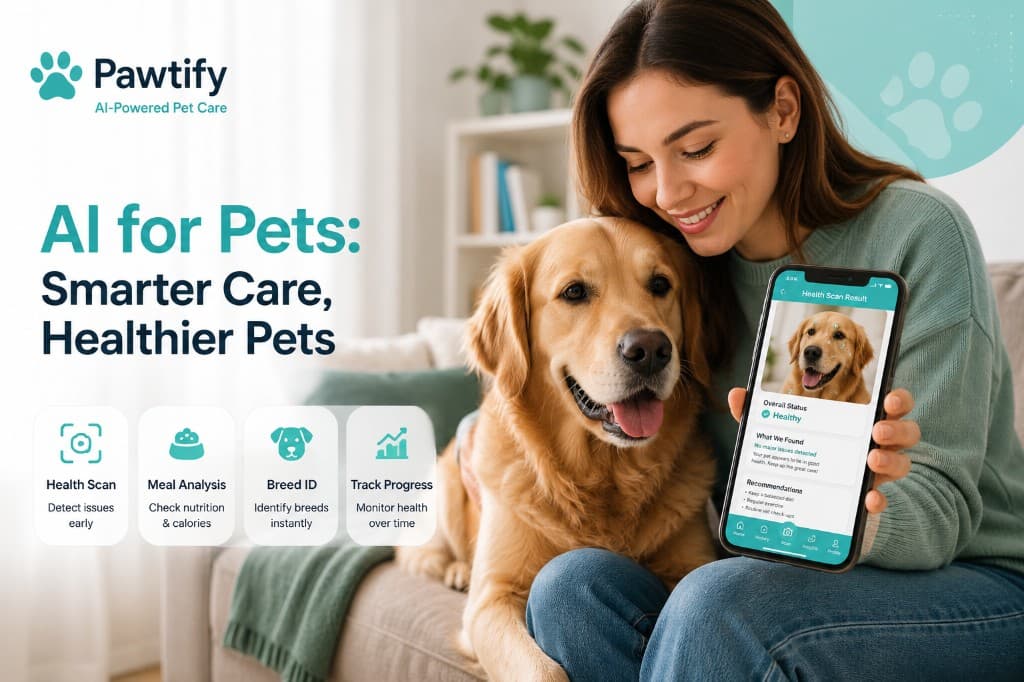
Artificial intelligence (AI) is rapidly changing many aspects of daily life—and pet care is no exception. From identifying breeds to analyzing pet health and estimating meal nutrition, AI-powered tools are helping pet owners make more informed decisions about their pets' wellbeing.
While AI cannot replace a veterinarian, it can provide valuable insights, help monitor changes over time, and encourage pet owners to seek professional care when necessary.
In this article, we'll explore how AI is being used in modern pet care and what the future may hold.
What Is AI for Pets?
AI for pets refers to the use of artificial intelligence to assist pet owners in understanding, monitoring, and managing their pets' health and daily care.
Using technologies such as computer vision, machine learning, and large language models, AI can analyze images, recognize patterns, and provide educational information tailored to a specific pet.
Modern AI pet care tools can assist with:
- Health monitoring
- Breed identification
- Nutrition analysis
- Weight tracking
- Wellness recommendations
- Symptom education
- Activity tracking
The goal isn't to replace veterinary professionals, but to help owners become more proactive in caring for their pets.
How AI Is Used in Pet Care
1. AI Health Analysis
One of the fastest-growing applications of AI is image-based health analysis.
By analyzing photos of a pet, AI can identify visible changes that may warrant closer attention, such as:
- Skin irritation
- Hair loss
- Eye discharge
- Ear redness
- Visible wounds
- Coat condition
These tools can help owners notice problems earlier and decide whether veterinary care may be needed.
It's important to remember that AI cannot diagnose diseases or replace a physical examination by a licensed veterinarian.
2. AI Nutrition Analysis
Many pet owners struggle to determine whether they're feeding the correct amount of food.
AI can analyze a photo of a meal to estimate:
- Calories
- Protein
- Fat
- Carbohydrates
- Portion size
Combined with information such as age, weight, breed, and activity level, AI can provide personalized feeding guidance to support healthy nutrition.
3. Breed Identification
Not every pet owner knows their dog's or cat's breed.
AI image recognition can estimate a pet's breed by comparing physical characteristics with large datasets of known breeds.
While mixed breeds may be more difficult to identify with certainty, AI often provides useful estimates that can help owners better understand typical breed characteristics.
4. Health Tracking Over Time
One photo rarely tells the whole story.
AI becomes even more valuable when it helps monitor changes over weeks or months.
Examples include:
- Skin condition improvements
- Weight trends
- Healing progress
- Coat quality
- Recurring symptoms
Tracking these changes provides useful context for both pet owners and veterinarians.
5. Personalized Wellness Insights
AI can combine multiple sources of information, including:
- Age
- Breed
- Weight
- Nutrition
- Previous health observations
- Activity levels
to generate educational wellness recommendations tailored to an individual pet.
These insights can encourage preventive care rather than waiting until problems become serious.
Benefits of AI for Pet Owners
AI offers several advantages for everyday pet care.
Early Awareness
Monitoring changes over time may help owners recognize potential issues earlier.
Convenience
Instead of searching through dozens of websites, AI can summarize educational information in one place.
Better Record Keeping
Health observations, meal history, weight, and photos can all be stored in one timeline.
Personalized Recommendations
Unlike generic articles, AI can tailor guidance using information about your individual pet.
What AI Cannot Do
Although AI is becoming increasingly capable, it still has important limitations.
AI cannot:
- Diagnose diseases with certainty
- Replace laboratory testing
- Perform physical examinations
- Prescribe medication
- Replace emergency veterinary care
Any pet showing severe symptoms should always be evaluated by a licensed veterinarian.
AI should be viewed as a supportive tool—not a replacement for professional medical care.
The Future of AI in Pet Care
Artificial intelligence continues to evolve rapidly.
Future AI pet care tools may include:
- Continuous health monitoring
- Wearable pet devices
- Personalized preventive care
- Earlier disease detection
- Integration with veterinary medical records
- Smarter nutrition planning
- Predictive wellness insights
As technology advances, AI is expected to become an increasingly valuable companion for responsible pet ownership.
How Pawtify Uses AI
Pawtify is an AI-powered pet care app designed to help pet owners better understand their pets' health, nutrition, and overall wellbeing.
With Pawtify, you can:
- Analyze visible health concerns from photos
- Estimate calories and nutrition from pet meals
- Identify dog and cat breeds
- Track your pet's weight over time
- Organize health observations and scan history
- Receive educational wellness insights powered by AI
Pawtify is designed to complement—not replace—professional veterinary care by helping pet owners stay informed and monitor their pets more effectively.
Frequently Asked Questions
Is AI accurate for pet health?
AI can identify visible patterns and provide educational insights, but it cannot diagnose medical conditions with certainty. Veterinary evaluation remains essential for accurate diagnosis and treatment.
Can AI replace veterinarians?
No. AI is intended to support pet owners and veterinary professionals, not replace them.
Is AI useful for healthy pets?
Yes. AI can help monitor nutrition, weight, activity, and visible health changes before problems become serious.
Which pets can benefit from AI?
AI-powered pet care tools can assist owners of dogs, cats, rabbits, birds, horses, and many other companion animals, depending on the features available.
Final Thoughts
Artificial intelligence is making pet care more accessible, personalized, and proactive than ever before. While it should never replace veterinary expertise, AI can help pet owners monitor their pets, organize health information, and make more informed decisions every day.
As AI technology continues to improve, tools like Pawtify have the potential to become valuable companions in supporting healthier, happier lives for pets and the people who care for them.
Read: What Is AI Pet Care and How Can It Help Pet Owners?
Ready to care smarter?
Download Pawtify to start scanning, tracking, and building better wellness habits for your pets.