
Pet Food Guide: How to Choose Healthy Food for Your Pet
Learn how to choose the best pet food for dogs and cats. Discover different types of pet food, ingredients to look for, feeding tips, and how proper nutrition supports long-term health.
10 min read
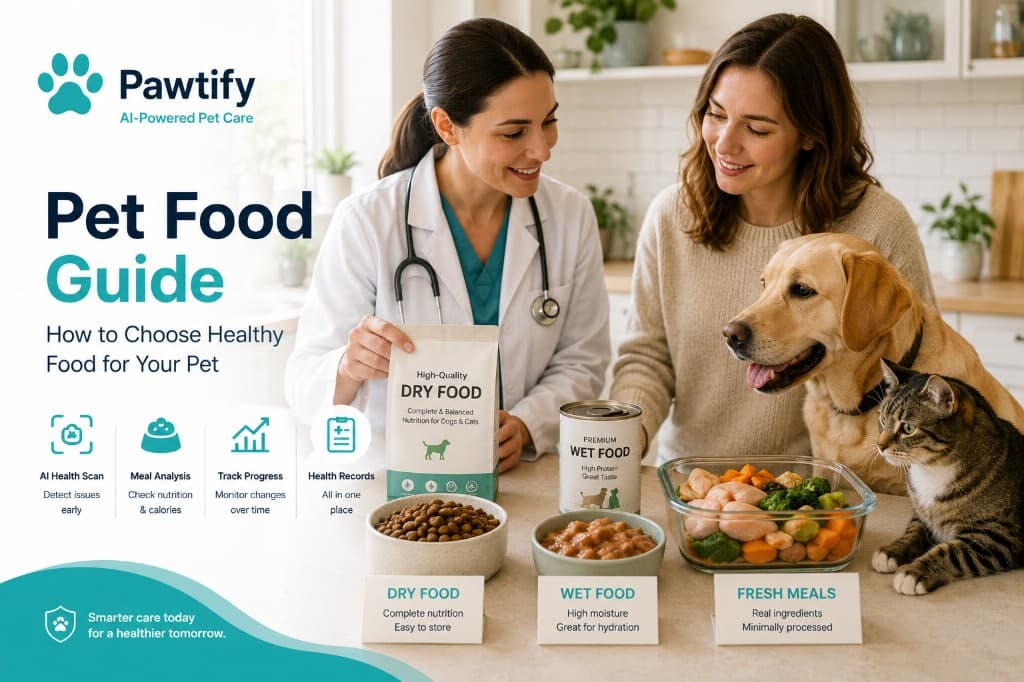
Choosing the right pet food is one of the most important decisions you can make for your pet's long-term health. Proper nutrition supports healthy growth, maintains an ideal weight, strengthens the immune system, and helps prevent many common health problems.
With hundreds of pet food brands and formulas available, finding the right option can feel overwhelming. Understanding what your pet needs makes the decision much easier.
In this guide, we'll explain the different types of pet food, essential nutrients, how to read labels, and tips for choosing the best food for your dog or cat.
Why Good Nutrition Matters
Like people, pets rely on balanced nutrition to stay healthy.
A high-quality diet helps support:
- Healthy muscles
- Strong bones
- Healthy skin and coat
- Brain development
- Digestive health
- Immune function
- Energy levels
- Healthy aging
Poor nutrition may contribute to obesity, digestive issues, nutrient deficiencies, and chronic health conditions.
Types of Pet Food
There are several common types of pet food, each with its own advantages.
Dry Food (Kibble)
Dry food is the most popular choice for many pet owners.
Benefits include:
- Convenient to store
- Affordable
- Long shelf life
- Easy portion control
- May help reduce plaque buildup
However, dry food generally contains less moisture than wet food.
Wet Food (Canned Food)
Wet food contains significantly more water than kibble.
Advantages include:
- Higher moisture content
- Often more palatable
- Easier to chew
- Helpful for pets that don't drink enough water
Some owners combine wet and dry food to provide variety.
Fresh Pet Food
Fresh pet food has become increasingly popular.
These meals are often:
- Minimally processed
- Refrigerated
- Made with recognizable ingredients
Fresh diets may appeal to some owners, but they should still provide complete and balanced nutrition.
Freeze-Dried and Dehydrated Food
These products remove moisture while preserving nutrients.
Before feeding, some products require rehydration with water.
Prescription Diets
Veterinarians may recommend prescription diets for pets with conditions such as:
- Kidney disease
- Diabetes
- Food allergies
- Urinary problems
- Digestive disorders
These diets should only be used under veterinary guidance.
What Nutrients Do Pets Need?
A balanced diet typically includes:
Protein
Protein supports:
- Muscle development
- Tissue repair
- Immune function
Animal-based proteins are generally easier for dogs and cats to digest.
Fat
Healthy fats provide:
- Energy
- Skin health
- Coat quality
- Brain development
Essential fatty acids such as omega-3 and omega-6 support overall wellness.
Carbohydrates
Carbohydrates provide energy and dietary fiber.
While dogs can digest carbohydrates well, cats generally require diets higher in animal protein.
Vitamins and Minerals
Balanced pet foods contain essential nutrients including:
- Calcium
- Phosphorus
- Zinc
- Iron
- Vitamin A
- Vitamin D
- Vitamin E
- B vitamins
These nutrients support growth, metabolism, and immune function.
How to Read a Pet Food Label
When comparing products, pay attention to:
- Ingredient list
- Guaranteed analysis
- Feeding guidelines
- Life stage recommendations
- Complete and balanced nutritional statement
Ingredients are listed by weight, meaning the first few ingredients typically make up the largest portion of the food.
Choosing the Right Food
The best food depends on your pet's individual needs.
Consider factors such as:
- Species
- Age
- Breed
- Weight
- Activity level
- Health conditions
- Food sensitivities
Puppies and kittens have different nutritional requirements than adult or senior pets.
How Much Should You Feed?
Feeding recommendations vary depending on:
- Weight
- Age
- Activity level
- Body condition
- Calorie content of the food
Overfeeding is one of the leading causes of obesity in pets.
Instead of relying only on the package instructions, consult your veterinarian or estimate daily calories with the dog calorie calculator. Cat owners can calculate your cat’s calorie needs the same way.
Common Feeding Mistakes
Many owners unintentionally make feeding mistakes such as:
- Overfeeding treats
- Feeding table scraps
- Measuring portions inaccurately
- Switching foods too quickly
- Ignoring weight changes
Regularly monitoring your pet's body condition can help identify problems early.
Foods Pets Should Never Eat
Some human foods can be toxic.
Avoid feeding:
- Chocolate
- Grapes
- Raisins
- Onions
- Garlic
- Xylitol
- Alcohol
- Macadamia nuts
- Cooked bones
If your pet consumes a potentially toxic food, contact your veterinarian immediately.
Can AI Help Improve Pet Nutrition?
AI-powered pet care tools are making nutrition management easier than ever.
For example, Pawtify allows pet owners to analyze pet meals, estimate calories, monitor nutritional intake, and receive educational feeding insights based on their pet's age, breed, weight, and activity level.
While AI can help owners make more informed decisions, it should complement—not replace—professional veterinary advice, especially for pets with medical conditions.
Frequently Asked Questions
Is wet food better than dry food?
Neither is universally better. Both can provide complete nutrition when formulated appropriately. The best choice depends on your pet's individual needs.
Can dogs and cats eat the same food?
No. Cats have unique nutritional requirements, including higher protein needs and nutrients such as taurine that are essential for feline health.
How often should I feed my pet?
Adult dogs are often fed once or twice daily, while cats may benefit from multiple small meals. Puppies and kittens generally require more frequent feeding.
How do I know if my pet's food is good quality?
Look for a complete and balanced nutritional statement, appropriate life-stage formulation, and ingredients that match your pet's nutritional needs.
Final Thoughts
Proper nutrition is one of the foundations of a healthy, happy life for your pet. Choosing balanced food, feeding appropriate portions, and monitoring weight over time can significantly improve long-term health and wellbeing.
Every pet has unique nutritional needs based on age, breed, lifestyle, and medical history. Working with your veterinarian and using tools like Pawtify to monitor meals and calorie intake can help you make informed feeding decisions that support your pet throughout every stage of life.
Read: How Many Calories Should My Dog Eat?
Ready to care smarter?
Download Pawtify to start scanning, tracking, and building better wellness habits for your pets.