
How Much Wet Food Should I Feed My Cat? A Complete Feeding Guide
Learn how much wet food your cat should eat based on weight, age, activity level, and lifestyle. Use our feeding guide and Cat Calorie Calculator to estimate your cat's daily calorie needs.
9 min read
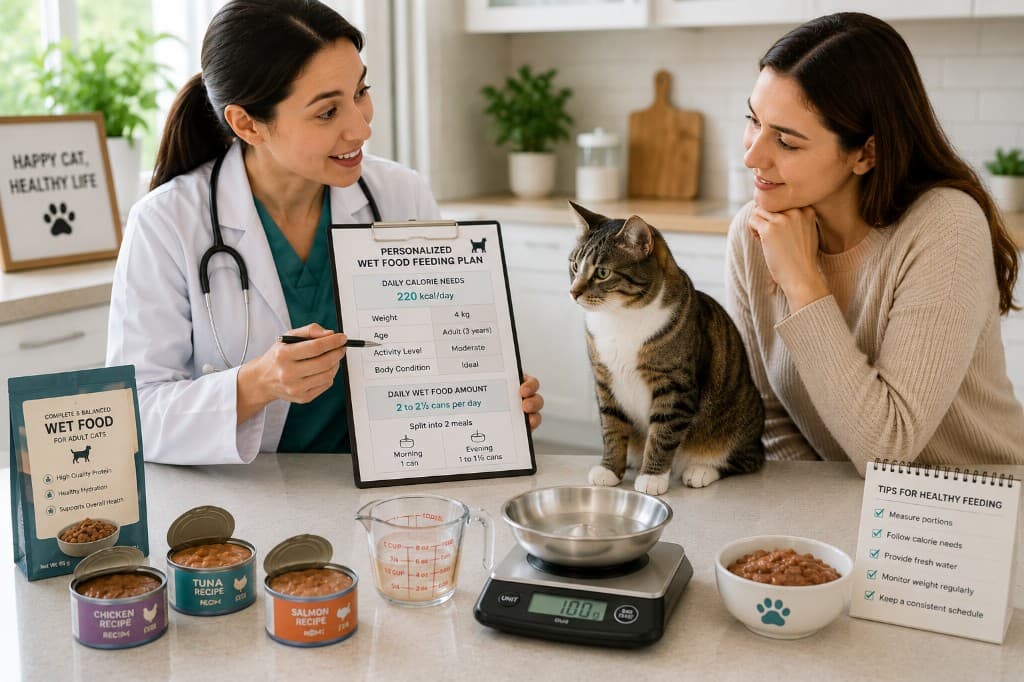
Feeding your cat the right amount of wet food is essential for maintaining a healthy weight and supporting long-term health. Too little food can lead to nutritional deficiencies and weight loss, while overfeeding may contribute to obesity and related health problems.
So, how much wet food should you feed your cat?
The answer depends on several factors, including your cat's weight, age, activity level, body condition, and the calorie content of the food itself.
In this guide, we'll explain how to estimate your cat's daily wet food needs and how to avoid common feeding mistakes.
👉 Estimate calories first with our free Cat Calorie Calculator: /cat-calorie-calculator
Why Wet Food Is Good for Cats
Wet food offers several benefits, especially for cats that don't naturally drink much water.
Advantages include:
- High moisture content
- Supports urinary tract health
- Easier to chew
- Often more palatable
- Helps increase daily water intake
Many veterinarians recommend incorporating wet food into a balanced feeding routine.
How Much Wet Food Does My Cat Need?
There isn't one serving size that works for every cat.
Daily food intake depends on:
- Body weight
- Age
- Activity level
- Indoor or outdoor lifestyle
- Whether your cat is spayed or neutered
- Body condition
- Calories in the food
The best way to determine the correct amount is by calculating your cat's daily calorie requirement first.
General Wet Food Feeding Guide
The table below provides approximate daily amounts for healthy adult cats eating only wet food.
| Cat Weight | Estimated Calories | Approximate Wet Food* |
|---|---|---|
| 2 kg (4.4 lb) | 120–160 kcal | 1–1½ cans |
| 3 kg (6.6 lb) | 160–200 kcal | 1½–2 cans |
| 4 kg (8.8 lb) | 180–240 kcal | 2–2½ cans |
| 5 kg (11 lb) | 220–280 kcal | 2½–3 cans |
| 6 kg (13.2 lb) | 260–320 kcal | 3–3½ cans |
*Based on a standard 85 g (3 oz) can containing approximately 90–100 kcal.
These values are only general estimates.
Always check the calorie information on your cat's food label.
Factors That Affect Feeding Amounts
1. Age
Kittens
Growing kittens require significantly more calories than adult cats because they are developing rapidly.
They also benefit from multiple smaller meals throughout the day.
Adult Cats
Healthy adult cats generally require enough calories to maintain a stable body weight.
Senior Cats
Older cats often become less active and may require fewer calories.
However, some senior cats lose weight due to underlying medical conditions, so regular weight monitoring is important.
2. Activity Level
Cats that spend more time playing, climbing, or exploring outdoors generally burn more calories than indoor cats.
Examples include:
- Outdoor cats
- Highly active indoor cats
- Young adult cats
Less active cats often require smaller portions.
3. Body Condition
If your veterinarian recommends weight loss or weight gain, portion sizes may need adjustment.
Cats that are overweight often require a carefully managed calorie reduction rather than simply feeding less food without guidance.
4. Mixed Feeding (Wet + Dry Food)
Many owners feed both wet and dry food.
If you do, remember that both contribute to your cat's total daily calories.
For example:
- Morning: Wet food
- Evening: Dry food
The combined calories should stay within your cat's daily needs.
How to Read the Food Label
Different brands contain different calorie amounts.
Look for:
- Calories per can or pouch
- Feeding guidelines
- Complete and balanced nutritional statement
- Life stage recommendation
Never assume all wet foods contain the same number of calories.
Signs Your Cat May Be Eating Too Much
Overfeeding may cause:
- Weight gain
- Difficulty feeling the ribs
- Reduced waistline
- Less interest in playing
- Difficulty grooming
Obesity increases the risk of diabetes, arthritis, and other chronic conditions.
Signs Your Cat May Not Be Eating Enough
Watch for:
- Weight loss
- Low energy
- Visible ribs
- Poor coat condition
- Muscle loss
Consult your veterinarian if these signs develop.
Tips for Feeding Wet Food
To keep your cat healthy:
- Measure portions accurately.
- Follow calorie recommendations instead of guessing.
- Divide meals throughout the day.
- Refrigerate unused wet food promptly.
- Provide fresh water at all times.
- Monitor body weight regularly.
Can AI Help Manage Your Cat's Nutrition?
AI-powered pet care tools can make feeding easier and more personalized.
For example, Pawtify helps cat owners:
- Estimate meal calories
- Analyze food from photos
- Track daily calorie intake
- Monitor weight trends
- Receive personalized nutrition insights
Combined with a calorie calculator, these tools can help support healthy feeding habits throughout your cat's life.
Frequently Asked Questions
Can I feed my cat only wet food?
Yes. A complete and balanced wet food can provide all the nutrients a healthy cat needs. Always ensure it is formulated for your cat's life stage.
How many cans of wet food should my cat eat per day?
It depends on your cat's weight, activity level, and the calorie content of the food. Many healthy adult cats require around 2–3 standard 85 g (3 oz) cans per day, but individual needs vary.
Is wet food better than dry food?
Neither is universally better. Wet food provides more moisture, while dry food is convenient and often more economical. Many cats thrive on a combination of both.
Should I leave wet food out all day?
Wet food should not be left at room temperature for extended periods. Follow the manufacturer's guidance, and refrigerate leftovers promptly.
Calculate Your Cat's Daily Calorie Needs
Every cat is unique, and feeding the correct amount starts with understanding how many calories they need each day.
Use Pawtify's Cat Calorie Calculator to estimate your cat's daily calorie requirements based on weight, age, activity level, and body condition.
👉 Try the Cat Calorie Calculator: /cat-calorie-calculator
Combined with our feeding guide, it can help you make informed decisions and support your cat's long-term health.
Read: Pet Food Guide: How to Choose Healthy Food for Your Pet
Ready to care smarter?
Download Pawtify to start scanning, tracking, and building better wellness habits for your pets.