
Why Is My Cat Vomiting? Common Causes, Symptoms, and When to See a Vet
Wondering why your cat is vomiting? Learn the common causes of vomiting in cats, treatment options, warning signs, and when it's time to visit a veterinarian.
10 min read
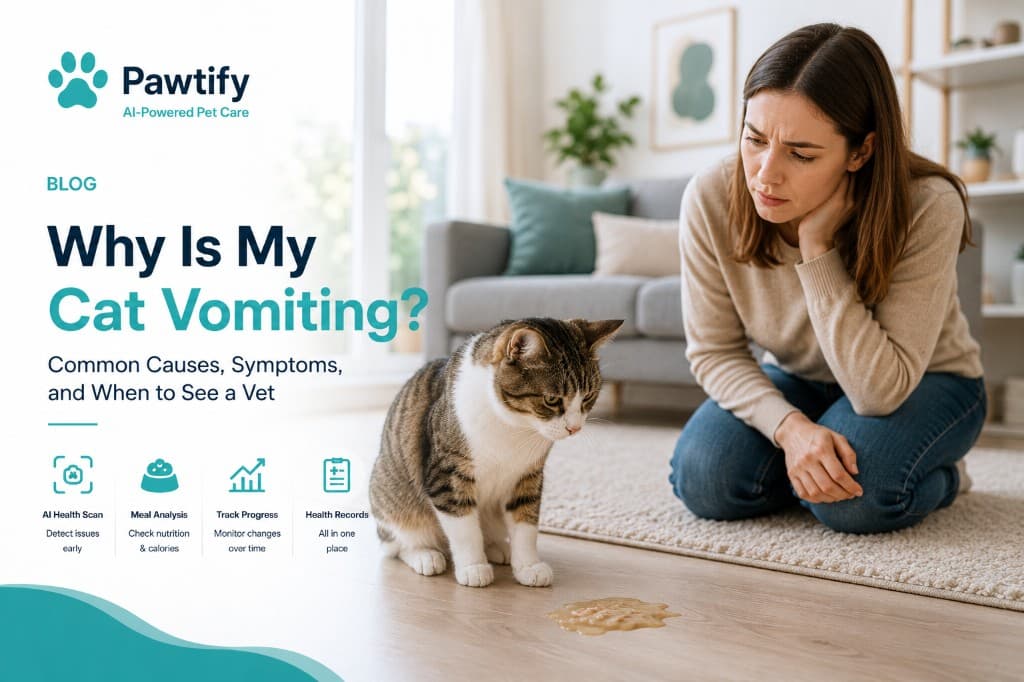
Seeing your cat vomit can be worrying, especially if it happens repeatedly or is accompanied by other symptoms. While an occasional episode may simply be caused by a hairball or eating too quickly, frequent vomiting can signal an underlying medical condition that requires veterinary care.
Knowing the difference between occasional vomiting and a more serious problem can help you decide when it's safe to monitor your cat at home and when it's time to contact your veterinarian.
In this guide, we'll explore the most common reasons cats vomit, what symptoms to watch for, and when professional care is necessary.
Is It Normal for Cats to Vomit?
Unlike many other pets, cats occasionally vomit for relatively harmless reasons, such as passing a hairball.
An occasional episode may not be a cause for concern if your cat:
- Vomits only once
- Returns to normal behavior afterward
- Continues eating and drinking
- Remains active and alert
However, repeated vomiting or vomiting accompanied by other symptoms should never be ignored.
Common Causes of Cat Vomiting
1. Hairballs
Hairballs are one of the most common reasons cats vomit.
As cats groom themselves, they swallow loose fur. Most hair passes through the digestive tract, but some accumulates in the stomach and is eventually vomited.
Signs include:
- Gagging
- Retching
- Tubular hairball in the vomit
- Otherwise normal behavior
Long-haired cats are generally more prone to hairballs.
2. Eating Too Quickly
Some cats eat their meals so quickly that they vomit shortly afterward.
This usually occurs within minutes of eating and often contains undigested food.
Using a slow feeder or offering smaller meals may help.
3. Dietary Changes
Suddenly changing your cat's food can upset the digestive system.
Whenever possible, introduce new food gradually over 7–10 days.
4. Food Intolerance or Food Allergy
Some cats develop sensitivities to certain ingredients.
Common symptoms include:
- Vomiting
- Diarrhea
- Itchy skin
- Ear inflammation
- Excessive grooming
Your veterinarian may recommend an elimination diet to identify the trigger.
5. Stomach Upset (Gastroenteritis)
Inflammation of the stomach or intestines can result from:
- Eating spoiled food
- Viral infections
- Bacterial infections
- Dietary indiscretion
Cats with gastroenteritis may also experience diarrhea, reduced appetite, or lethargy.
6. Foreign Objects
Cats are naturally curious and may swallow objects such as:
- String
- Ribbon
- Hair ties
- Small toys
- Plastic
Foreign objects can block the digestive tract and require emergency veterinary treatment.
7. Kidney Disease
Chronic kidney disease is common in older cats.
In addition to vomiting, symptoms may include:
- Increased thirst
- Frequent urination
- Weight loss
- Poor appetite
- Bad breath
Early diagnosis can improve long-term management.
8. Hyperthyroidism
Older cats with hyperthyroidism often develop:
- Weight loss
- Increased appetite
- Vomiting
- Hyperactivity
- Increased thirst
Blood testing is required for diagnosis.
9. Toxic Substances
Certain household items are poisonous to cats, including:
- Lilies
- Antifreeze
- Human medications
- Chocolate
- Essential oils
- Cleaning chemicals
If poisoning is suspected, seek emergency veterinary care immediately.
What Does the Vomit Look Like?
The appearance of the vomit may provide useful clues.
| Appearance | Possible Cause |
|---|---|
| Hairball | Hair accumulation |
| Undigested food | Eating too quickly |
| Yellow foam | Empty stomach or bile |
| White foam | Mild stomach irritation |
| Green vomit | Bile or intestinal contents |
| Blood | Stomach ulcer, injury, or serious illness |
| Foreign material | Swallowed object |
Only a veterinarian can determine the exact cause.
Symptoms That Require Veterinary Attention
Contact your veterinarian if your cat experiences:
- Vomiting multiple times in one day
- Vomiting for more than 24 hours
- Blood in the vomit
- Difficulty breathing
- Severe lethargy
- Refusing food or water
- Weight loss
- Persistent diarrhea
- Abdominal pain
- Collapse
These symptoms may indicate a more serious medical condition.
How Veterinarians Diagnose Vomiting
Depending on your cat's condition, your veterinarian may perform:
- Physical examination
- Blood tests
- Urinalysis
- Fecal examination
- Abdominal X-rays
- Ultrasound
- Foreign body evaluation
Additional testing may be needed if vomiting becomes chronic.
Treatment Options
Treatment depends on the underlying cause.
Possible treatments include:
Supportive Care
- Fluid therapy
- Anti-nausea medication
- Easily digestible diets
Dietary Management
Special veterinary diets may be recommended for cats with food sensitivities or chronic digestive problems.
Medications
Depending on the diagnosis, your veterinarian may prescribe medications to treat infection, inflammation, or underlying diseases.
Surgery
Cats with intestinal blockages or certain foreign objects may require surgery.
Can You Care for a Vomiting Cat at Home?
If your cat vomits only once and otherwise appears healthy, careful observation may be appropriate.
However, avoid:
- Giving human medications
- Forcing food
- Delaying veterinary care if vomiting continues
Always ensure fresh water is available to reduce the risk of dehydration.
Can AI Help Monitor Vomiting?
AI-powered pet health tools can help owners organize health observations and monitor changes over time.
For example, Pawtify allows pet owners to document vomiting episodes, record accompanying symptoms, track appetite and weight, and maintain a health history that can be shared with a veterinarian.
While AI can provide educational insights and support ongoing monitoring, it cannot diagnose medical conditions or replace professional veterinary care.
Frequently Asked Questions
Is it normal for cats to vomit every week?
No. Frequent vomiting is not considered normal and should be evaluated by a veterinarian.
Should I worry if my cat vomits a hairball?
Occasional hairballs are common, especially in long-haired cats. However, frequent hairballs or repeated vomiting may indicate another problem.
Why is my cat vomiting but acting normal?
A single vomiting episode caused by eating too quickly or passing a hairball may not be serious. Persistent or recurring vomiting should be investigated.
When is cat vomiting an emergency?
Seek emergency veterinary care if your cat vomits blood, cannot keep water down, appears extremely lethargic, has difficulty breathing, or is suspected of swallowing a foreign object or toxin.
Final Thoughts
Occasional vomiting can happen in otherwise healthy cats, but repeated vomiting should never be ignored. Hairballs, dietary changes, digestive upset, chronic diseases, and foreign objects are among the many possible causes.
Monitoring your cat's symptoms and seeking veterinary advice when warning signs appear can lead to earlier diagnosis and better outcomes.
If your cat experiences recurring vomiting, documenting episodes with Pawtify can help you track symptom patterns and provide valuable information during your veterinary visit.
Read: Pet Food Guide: How to Choose Healthy Food for Your Pet
Ready to care smarter?
Download Pawtify to start scanning, tracking, and building better wellness habits for your pets.