
Dog Skin Rash: Causes, Symptoms & When to See a Vet
Learn what a dog skin rash looks like, common causes from allergies to fleas and infections, home care tips, and when to see a veterinarian.
16 min read
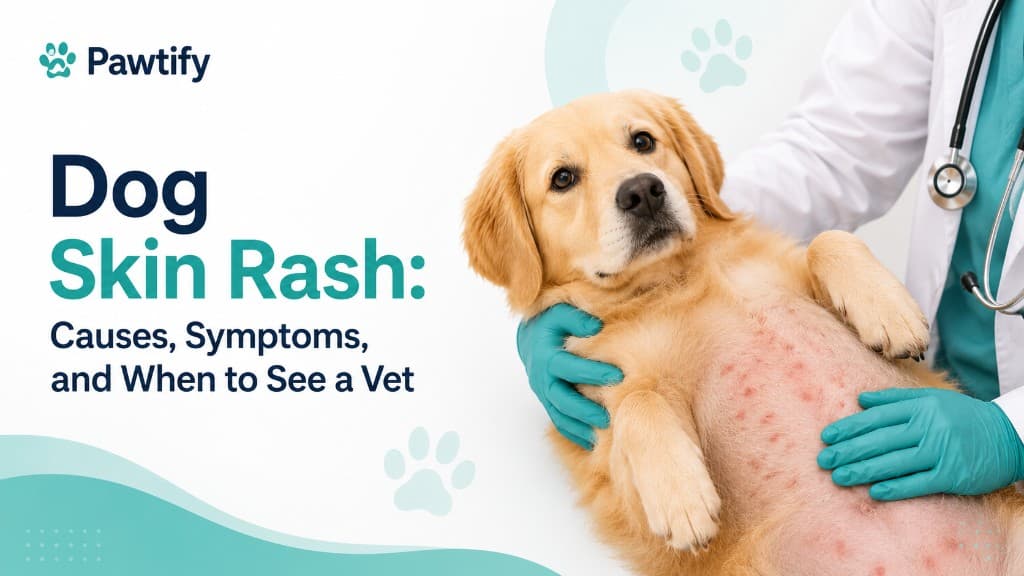
Skin rashes are one of the most common reasons dogs visit the veterinarian. A rash may look like redness, bumps, flaky patches, or moist sores. Some cases are mild and temporary. Others can signal dog allergies, parasites, infections, or another underlying skin problem that needs professional care.
If you have noticed a rash on your dog, red skin, or itchy skin in dogs that will not settle, this guide explains what dog skin rashes often look like, common causes, what different body locations may suggest, safe home care, and when to see a vet.
This article is for education only. It is not a diagnosis and should not replace veterinary advice.
What Does a Dog Skin Rash Look Like?
A dog skin rash can look different depending on the cause, breed, and coat type. Common appearances include:
- Red patches or general skin redness
- Raised bumps or pimple-like spots
- Hair loss around the affected area
- Dry, rough, or thickened skin
- Flaky or scaly patches
- Crusts or scabs
- Blisters or oozing spots
- Moist, shiny lesions often called hot spots
You may also notice odor, swelling, or darkening of the skin after long-term irritation.
Rashes can appear anywhere. They are especially common on the belly, paws, ears, armpits, face, neck, and groin. Photos taken over several days can help you and your veterinarian track whether the rash is improving or spreading.
If your dog is also constantly itchy, the rash may be part of a broader skin allergy or irritation pattern rather than a one-time issue.
Common Causes of Dog Skin Rash
Many conditions can cause a dog rash. The sections below cover the most common ones in plain language.
Allergies
Allergies are among the leading causes of dog skin irritation and dermatitis.
Environmental allergies
Pollen, dust mites, mold, and other airborne triggers can lead to itching, redness, and recurring rashes. Signs may be seasonal or year-round.
Food allergies
Some dogs react to proteins or other ingredients in food. Food-related skin problems may include itching, ear inflammation, paw chewing, and recurring rash. Learn more in our guide to dog allergies.
Seasonal allergies
Seasonal flares often worsen in spring or fall. Dogs may scratch more, develop red belly skin, or get secondary infections from constant licking.
Flea Allergy Dermatitis
Even a small number of flea bites can trigger intense itching in sensitive dogs. Flea allergy dermatitis often affects the lower back, tail base, and thighs. Keeping flea prevention up to date is one of the most effective ways to reduce this type of rash.
Contact Dermatitis
Contact dermatitis happens when skin reacts to something it touches, such as grass, fertilizers, cleaning products, new bedding, or certain shampoos. The rash often appears on the belly, paws, or other areas that contacted the irritant.
Yeast Infection
Yeast overgrowth can cause itchy, greasy, or smelly skin. It often affects skin folds, ears, paws, and armpits. Dogs with allergies are more prone to yeast problems because scratching damages the skin barrier.
Bacterial Skin Infection
Bacteria can enter through scratches, bites, or open sores. Bacterial infections may cause redness, pus-filled bumps, crusts, odor, and discomfort. Untreated infections can spread and may need veterinary antibiotics.
Ringworm
Despite the name, ringworm is a fungal infection. It often shows up as circular hair loss with scaly or red edges. Some forms can spread to other pets or people, so veterinary confirmation matters.
Mange
Mange is caused by mites. It may lead to intense itching, hair loss, redness, and crusting. Different mite types behave differently, and treatment should be guided by a veterinarian.
Hot Spots
Hot spots on dogs are painful, moist, inflamed areas that can appear quickly after intense licking or chewing. They often need prompt care to control pain, infection, and self-trauma.
Dry Skin
Dry air, infrequent grooming, or certain diets may contribute to flaky, itchy skin. Dry skin alone is usually milder than infection, but scratching can still create secondary problems.
Parasites
Fleas, mites, and ticks can irritate skin directly or trigger allergic reactions. Look for fleas, flea dirt, scabs, or intense scratching, especially around the tail base and belly.
Hormonal Disorders
Conditions such as hypothyroidism or Cushing's disease may contribute to recurrent skin infections, thinning hair, or chronic skin changes. These usually need blood testing and long-term management.
Autoimmune Diseases
Less commonly, autoimmune skin disease can cause crusts, ulcers, or unusual lesions. These cases require veterinary diagnosis and should not be managed with home remedies alone.
Symptoms That Often Appear With a Rash
A rash is often only one part of the picture. Watch for:
- Itching or restlessness
- Licking or chewing paws
- Scratching at the face, neck, or belly
- Redness or swelling
- Scabs or open sores
- Hair loss
- Skin odor
- Ear shaking or head tilting (sometimes linked to allergies or dog ear infections)
- Changes in appetite or energy if the dog is very uncomfortable
The combination of symptoms can help your veterinarian narrow possible causes.
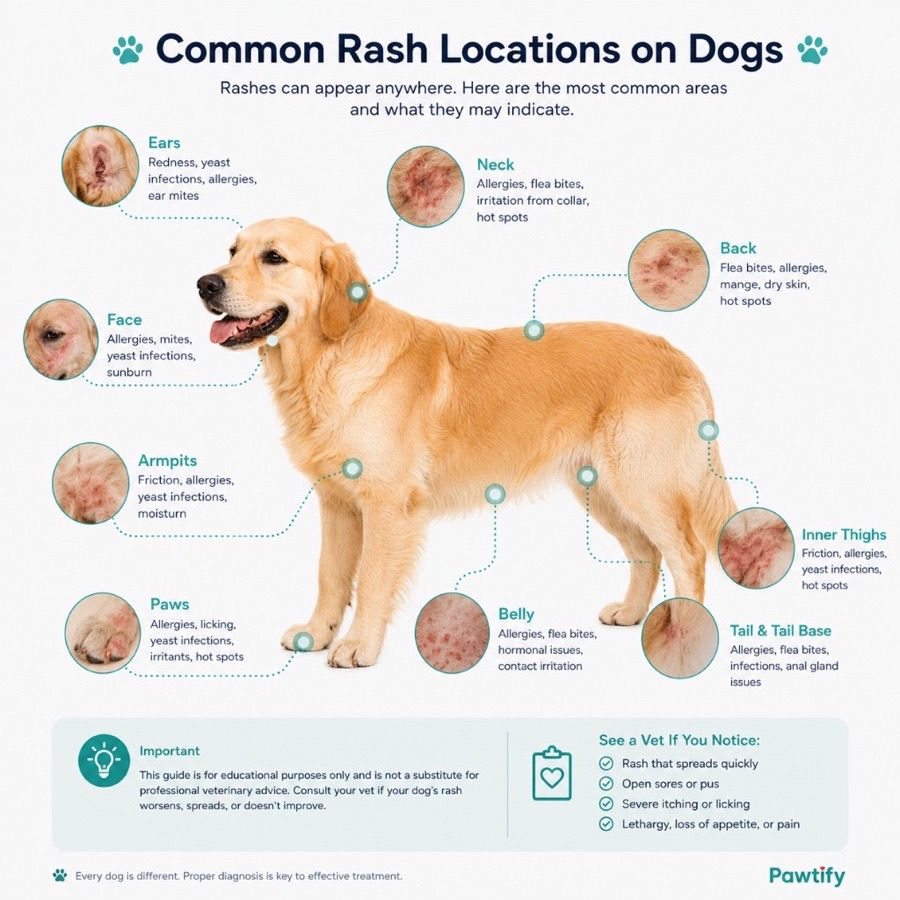
Common Rash Locations on Dogs
Where a rash appears can offer useful clues, but location alone cannot confirm a diagnosis.
Belly
A dog belly rash is common with allergies, flea bites, contact irritation, or heat and friction. Belly skin is thinner and easier to inspect, so redness there often shows up early.
Paws
Paw licking and redness may relate to allergies, yeast, irritants from walks, or foreign material between the toes. Chronic paw chewing can also create secondary infection.
Ears
Ear redness, odor, or discharge can accompany allergies and yeast overgrowth. Recurrent ear issues deserve veterinary care and may overlap with broader skin allergy patterns.
Face
Facial rashes may relate to allergies, mites, food reactions, or irritation around skin folds. Facial swelling with breathing changes can be urgent.
Neck
Neck irritation may come from collar friction, flea bites, allergies, or hot spots. Check that collars fit well and stay clean and dry.
Tail and Tail Base
Itching at the tail base is classic for flea allergy in many dogs. Anal gland issues or other allergies can also contribute.
Armpits and Inner Thighs
Warm, moist areas such as armpits and inner thighs are prone to friction, yeast, and allergy flares. Moisture and skin-fold contact can keep irritation going.
Dog Skin Rash Comparison Table
| Cause | Common symptoms | Contagious? | Needs vet? | Home care role |
|---|---|---|---|---|
| Allergies | Itching, redness, paw chewing, ear issues | No | Often yes if recurring | Trigger reduction, monitoring |
| Flea allergy | Intense itch, scabs near tail/back | Fleas spread between pets | Yes if severe or ongoing | Flea prevention is essential |
| Contact dermatitis | Rash where skin touched irritant | No | If spreading or painful | Remove irritant, monitor |
| Yeast infection | Odor, greasy skin, itchy folds/paws | Usually not to people | Often yes | Vet-guided cleansing only |
| Bacterial infection | Pus, crusts, pain, odor | Usually not | Yes | Do not delay care |
| Ringworm | Circular hair loss, scaly patches | Possible to pets/people | Yes | Isolation guidance from vet |
| Hot spots | Moist painful sore that grows fast | No | Often yes | Prevent licking, seek care |
| Dry skin | Flakes, mild itch | No | If not improving | Humidity, gentle grooming |
Symptom Urgency Guide
| Symptom | Possible concern | Urgency |
|---|---|---|
| Mild redness, dog still playful | Mild irritation or early allergy | Monitor closely |
| Persistent itching for several days | Allergy, fleas, early infection | Book a vet visit |
| Moist hot spot expanding quickly | Hot spot / infection risk | Prompt vet care |
| Pus, open sores, strong odor | Infection | Prompt vet care |
| Facial swelling or breathing trouble | Allergic reaction | Emergency care |
| Rash plus lethargy or appetite loss | Systemic illness possible | Same-day vet advice |
| Circular hair loss patches | Possible ringworm or other disease | Vet evaluation |
How to Check a Dog Skin Rash at Home
Before treatment decisions, gather useful observations:
- When did the rash first appear?
- Is it spreading, stable, or improving?
- Is your dog scratching, licking, or chewing a lot?
- Any recent food, shampoo, detergent, or bedding changes?
- Are flea prevention doses current?
- Is there odor, discharge, or pain when touched?
- Are other pets or people developing skin spots?
Clear, well-lit photos help you monitor day-to-day changes and give your veterinarian a useful timeline.
Home Care for Mild Cases
If your dog is otherwise bright and the rash is mild, careful monitoring may be reasonable for a short time.
Safe steps often include:
- Prevent constant licking with distraction, or an Elizabethan collar if your vet recommends one
- Gently clean only if your veterinarian advises a specific rinse or wipe
- Keep the area dry and free of harsh products
- Confirm flea and tick prevention is up to date
- Note food, walk locations, and new household products
- Avoid human creams, essential oils, alcohol, hydrogen peroxide, and leftover medications
Do not start antibiotics, antifungal creams, or steroid ointments without veterinary guidance. The wrong product can hide signs of infection or make irritation worse.
Dog Rash Treatment Options
Treatment depends on the diagnosis. A veterinarian may recommend:
Allergy management
- Trigger avoidance when possible
- Prescription anti-itch or anti-inflammatory medication
- Allergy testing or immunotherapy in selected cases
- Elimination diet trials for suspected food allergy
Parasite control
- Flea and tick preventatives
- Mite treatment when indicated
- Environmental cleaning for flea life stages
Infection treatment
- Antibiotics for bacterial skin infection
- Antifungal therapy for yeast or ringworm
- Medicated shampoos or wipes prescribed for your dog
Skin barrier support
- Veterinary-approved bathing routines
- Strategies to reduce scratching and self-trauma
- Follow-up checks for chronic dermatitis
Always ask your veterinarian before giving any medication.
When Should You Visit a Veterinarian?
Use this checklist.
Seek emergency care now if you notice
- Difficulty breathing
- Facial swelling
- Collapse or extreme weakness
- Uncontrolled bleeding
- Signs of severe pain
Book a veterinary appointment soon if you notice
- Rash lasting more than a few days
- Rapid spread
- Open sores, pus, or strong odor
- Severe itching that interrupts sleep
- Recurrent ear problems with skin flares
- Appetite loss, fever, or lethargy
- Suspected ringworm exposure in the household
Monitoring at home may be reasonable if
- The rash is small and mild
- Your dog is eating, drinking, and playful
- There is no odor, pus, or rapid growth
- You are actively removing possible irritants and watching daily photos
When in doubt, call your veterinary clinic. Early care often prevents small rashes from becoming infected hot spots.
Prevention Tips
You can reduce many flare-ups with steady habits:
- Keep flea and tick prevention consistent year-round if recommended in your area
- Use gentle, pet-safe shampoos and avoid over-bathing
- Groom regularly to spot early redness or hair loss
- Wash bedding and vacuum areas where fleas or allergens collect
- Introduce new foods gradually and discuss diet changes with your vet
- Maintain a healthy weight, which can reduce skin-fold moisture and friction
- Track calorie needs with tools like the dog calorie calculator when weight management is part of overall care
Good nutrition supports skin health, but food alone rarely resolves an active infection. If your dog needs feeding guidance, see our dog calorie needs guide and pet food guide.
Monitor Your Dog's Health with Pawtify
Education comes first, and a veterinarian remains the right place for diagnosis. After you understand the basics of dog skin rash care, tools like Pawtify can help you stay organized between visits.
Pawtify can help you:
- Scan visible skin concerns with AI for educational insights
- Track symptoms and photo changes over time
- Monitor weight trends
- Estimate meal calories and nutrition patterns
- Keep health history in one place
- Prepare clearer notes before a veterinary appointment
AI support can improve awareness and record-keeping. It cannot replace a physical exam, lab tests, or prescribed treatment.
Scan Your Dog's Health with Pawtify
Frequently Asked Questions
Can a dog skin rash heal on its own?
Mild irritation may improve if the trigger is removed. Persistent, painful, or spreading rashes should be evaluated by a veterinarian.
Why does my dog suddenly have a rash?
Sudden rashes may follow flea bites, contact with irritants, allergy flares, hot spots, or infection. Recent changes in food, grooming products, or environment are useful clues to share with your vet.
Can food cause a skin rash?
Yes. Food allergies can contribute to itching, redness, ear inflammation, and recurring dermatitis in some dogs.
Can I put coconut oil on my dog?
Coconut oil is sometimes used for dry skin, but it is not a reliable treatment for infection or allergy and may not suit every dog. Ask your veterinarian first.
Can humans catch my dog's rash?
Most dog rashes are not contagious to people. Ringworm is an important exception, so veterinary advice matters if contagious disease is possible.
Can stress cause dog skin problems?
Stress can increase licking and chewing, which may lead to hot spots or worsen existing irritation.
Should I bathe my dog?
A vet-guided bath can help in some allergy or infection plans. Harsh or frequent bathing can worsen dryness and irritation.
What cream is safe?
There is no universal safe cream for every dog rash. Avoid human rash products unless your veterinarian specifically recommends one.
What does ringworm look like?
It often appears as circular hair-loss patches with scaly or red borders, but other conditions can look similar.
How long does dog dermatitis last?
Mild cases may improve in days. Allergy-related or infectious dermatitis can last weeks and may return without a long-term plan.
Final Thoughts
A dog skin rash can stem from allergies, fleas, contact irritation, yeast or bacterial infection, ringworm, mange, hot spots, dry skin, or less common hormonal and autoimmune disease. Looking at the rash appearance, body location, and accompanying symptoms can help you decide whether to monitor briefly or seek care.
When symptoms are severe, spreading, or persistent, a veterinary exam is the safest next step. Between visits, careful photo tracking and organized health notes can make follow-up easier.
Read: Dog Allergies — Symptoms, Causes, and Treatment
Read: Dog Itchy Skin — Causes and When to See a Vet
Ready to care smarter?
Download Pawtify to start scanning, tracking, and building better wellness habits for your pets.